Program dates: March 19–27, 2027.
Included Services
- Airport-to-hotel-to-airport transfer in a private, air-conditioned car with assistance in Spanish
- Traditional welcome at the airport with marigold garlands or rose petals
- Accommodations at the hotels listed or similar, including taxes:
- 2 nights in Delhi
- 2 nights in Udaipur
- 3 nights in Jaipur
- 1 night in Agra
- 1 night in Varanasi
- Daily breakfast at the hotel
- 5 meals at local restaurants + 1 traditional vegetarian “Thali” meal in Varanasi + 1 Holi meal in Jaipur
- 1 dinner with a traditional dance show in Jaipur
- 1 cooking class with a Rajput family followed by “Holikan Dahan” with dinner included in Jaipur
- Guided tours and excursions as per the itinerary by air-conditioned car/minivan/bus
- Spanish-speaking tour guide from Day 2 to Day 9
- Admission to the listed monuments
- Train ticket from Agra to Varanasi in air-conditioned business class (subject to availability)
- Varanasi-Delhi flight in economy class (includes 15 kilos of checked baggage and 7 kilos of carry-on baggage)
- Free Wi-Fi in vehicles in Delhi, Jaipur, and Agra
- Shoe covers for visiting the Taj Mahal, temples, and mosques
- Luggage handling for one suitcase per person at the airport and/or train station
- 24-hour assistance in Spanish during your stay in India
Services Not Included
- Domestic flights and airport fees
- Excursions not mentioned in the itinerary
- Personal expenses such as beverages, laundry, phone calls, spa services, etc.
- Tips for drivers, guides, and waitstaff
Prices per person
| Singles | Double | Triple |
|---|---|---|
| 2,415 USD | 1,850 USD | 1,810 USD |
Prices per person based on a minimum of 2 people traveling together
Itinerary
- DAY 1: March 19 | ARRIVAL IN DELHI
Upon arrival at the Delhi airport, transfer to the hotel.
Room available from 2:00 p.m. Delhi, one of the oldest cities in the world, offers the wonderful atmosphere of an ancient city in Old Delhi and a modern one in New Delhi. The perfect blend of old and new makes it a fascinating destination to explore.
Overnight at the hotel.
- DAY 2: March 20 | DELHI
Breakfast.
In the morning, visit Old Delhi, passing by the Red Fort, built by the Mughal Emperor Shah Jahan. You’ll enjoy a rickshaw ride (a bicycle-powered,人力-pulled cart) through Chandni Chowk, one of the oldest and largest bazaars in India. Crisscrossed by narrow streets lined with shops vying for space, Chandni Chowk captures the essence of old-world Delhi shopping. Since the 17th century, this place has rightly been called a “shopper’s paradise” in Delhi. During Shah Jahan’s reign, a tree-lined canal ran through its center, reflecting the moon. This is how the name “Chandni Chowk”—meaning “place of moonlight”—came about. Next, we’ll visit the Jama Masjid, the largest mosque in India.
Next, we’ll visit the Sikh temple—Gurudwara Bangla Sahib—which allows us to explore one of the most important sites of the Sikh religion and experience its traditions and customs; a must-see on any visit to Delhi. Lunch is included at a local restaurant.
In the afternoon, we’ll visit Gandhi Smriti (also known as Birla House), where Mahatma Gandhi spent the last 144 days of his life and was assassinated on January 30, 1948. Later, we’ll tour New Delhi, walking past government buildings, Rashtrapati Bhawan (the residence of the President of India), Parliament, and India Gate (the Arc de Triomphe). Finally, we’ll visit the Qutub Minar, a massive 72-meter tower built by India’s first Muslim ruler, Qutub-ud-din Aibak.
Overnight at the hotel.
- DAY 3: March 21 | DELHI/KALAKHO/JAIPUR
Breakfast.
In the morning, we’ll depart by road for Jaipur (approx. 300 km, 4–5 hours), en route, we’ll stop in Kalakho for lunch (included) at the Umaid Kalakho Palace, which spans 20 acres of green space and was designed to capture the beauty of the gardens of the Mughal palaces of yesteryear. After lunch, we’ll continue on to Jaipur and, along the way, visit the Galtaji Monkey Temple. The Galta Temple is a complex located about 10 km from Jaipur and is well worth the trip, as it consists of several temples and pools of holy water. Many pilgrims come here because it is said that a saint named Gav once lived here, practicing meditation and performing penance. Today, it is popular for the large number of monkeys that live there, which is why it is known as the Monkey Temple.
Transfer to the hotel in Jaipur, the capital of Rajasthan, also known as “The Pink City” because the old city was painted a terracotta pink in 1876 to welcome Prince Albert.
In the afternoon/evening, we’ll enjoy the “HOLIKA DAHAN” ceremony and also participate in a cooking session with a Rajput family in Jaipur, Rajasthan, with dinner included. “Holika Dahan” is the first day of the popular Indian festival of colors called Holi. On this day, a sacred fire is lit on the night of the full moon in Phalguna (one of the 12 months of the Hindu calendar). According to Hindu mythology, it symbolizes the triumph of divine power over demonic forces.” Overnight at the hotel.
Includes: transportation and dinner
- Traditional welcome with tikka and garland, introduction to the host family.
- Welcome drinks; visit to the temple inside the family home. Conversation about cultural influences.
- Introduction to Indian cuisine.
- Canapés and cocktails, hands-on cooking session with Chef Aishwarya.
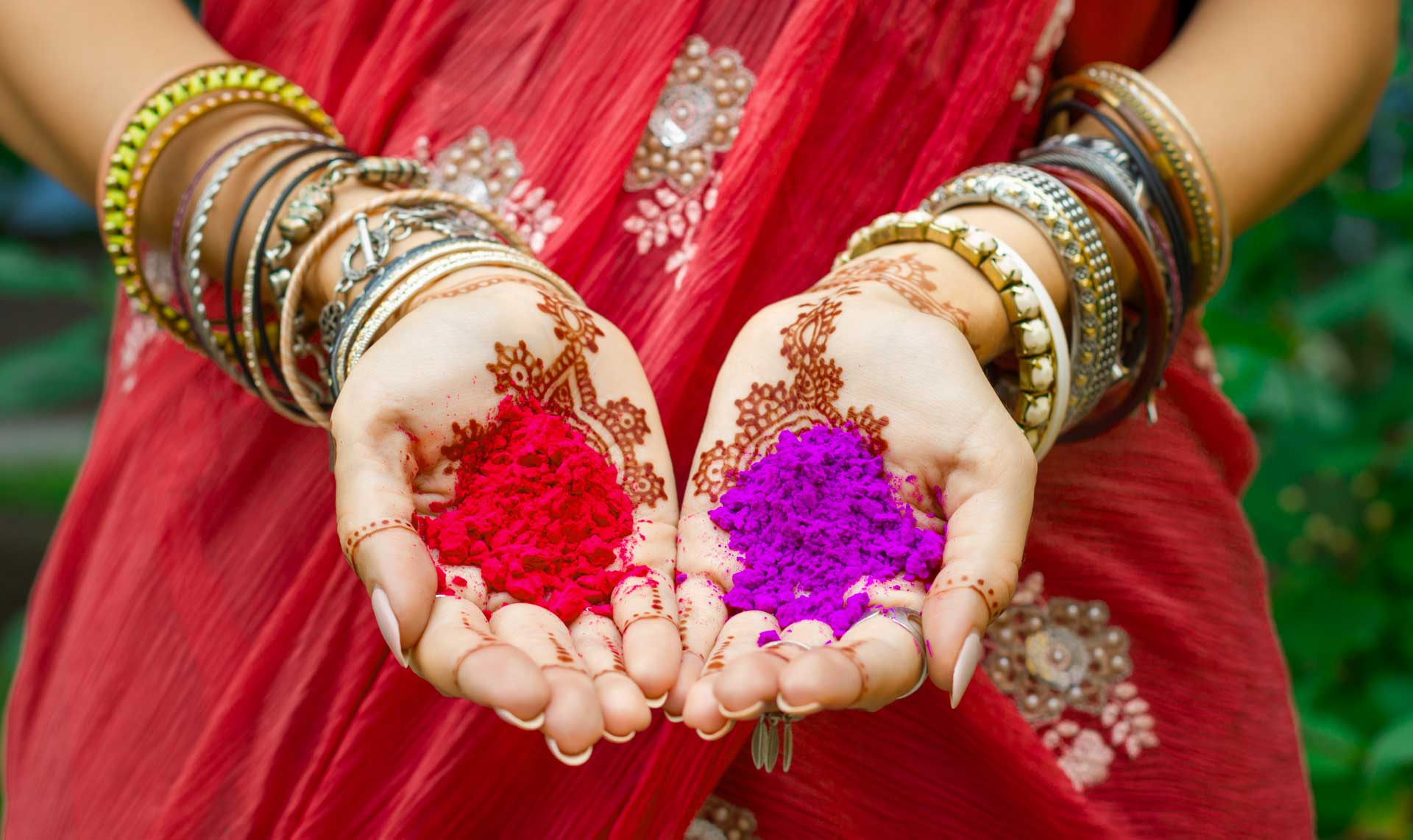
- Family dinner, a demonstration on how to tie a sari, and the opportunity to apply mehendi (temporary henna tattoo), dessert and non-alcoholic beverages with a closing celebration.
- Imagine spending time with your hosts before saying goodnight!
Overnight at the hotel
- DAY 4: March 22 | JAIPUR
Breakfast.
In the morning, transfer to the historic Govind Dev Ji Temple in Jaipur’s City Palace, dedicated to Govind Dev (Krishna) and his consort Radha, to participate in the Holi festivities with the local community.
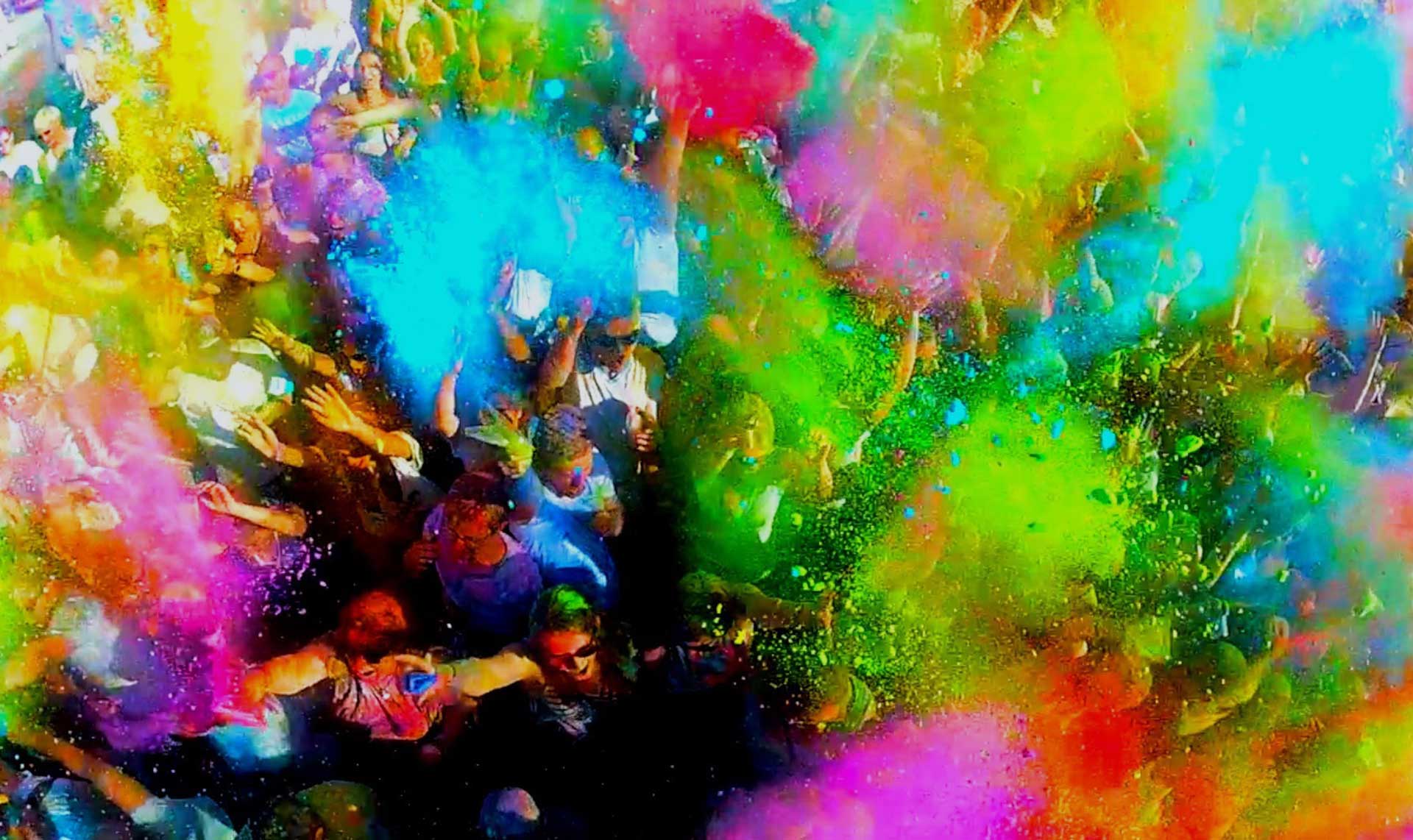
Then transfer to Narain Niwas Palace to celebrate Holi. Enjoy live music, dancing, drinks, and delicious treats. Let’s smear colors and splash water on each other this Holi with pichkaries (water guns) and water balloons in the company of your host, their friends, and family. Enjoy the fascinating traditions and customs of Holi, which have their own regional variations, and perhaps you’ll even learn how to make some local sweets with the lady of the house.
Return to the hotel. The afternoon is free for independent activities.
The package at Narain Niwas Palace includes: 10:30 a.m. – 1:30 p.m.
Welcome drink (non-alcoholic beverages), herbal powders + water guns + water balloons, lunch included, live traditional music, kurta pajamas (for both men and women), traditional turbans, open-air shower, and changing room.Overnight at the hotel.
- DAY 5: March 23 | JAIPUR
Breakfast.
In the morning, we’ll visit Amber Fort, traveling to and from the fort by jeep. Amber Fort, situated on a picturesque and rugged hill, is a fascinating blend of Hindu and Mughal architecture. Built by one of Akbar’s most trusted generals, Maharaja Man Singh I, in 1592, Amber Fort served as the primary residence of the Rajput rulers. With its massive walls, numerous gates, and paved paths, Amber Fort overlooks Maotha Lake in the city of Amer, which once served as the capital of the ancient princely state of Jaipur. We’ll take a stroll through the beautifully restored Jal Mahal, a former royal pleasure pavilion. Next, we’ll visit the Maharaja’s City Palace, which houses the former Royal Residence and a museum showcasing the collection of the royal family of Jaipur. Next, we’ll visit the Hawa Mahal, or Palace of the Winds—the five-story facade with 593 stone lattice windows, an emblem of the city of Jaipur. We’ll also visit the Jantar Mantar, or Astronomical Observatory. This is the largest and best-preserved of the five observatories built by Jai Singh II in different parts of the country. Lunch is included at a local restaurant.
In the afternoon, enjoy a tuk-tuk ride to explore Jaipur’s exotic “bazaars” and discover the region’s artistic richness, visiting “Bapu Bazar” (for textiles) and “Johari Bazar” (for jewelry). You’ll have the opportunity to stroll through the fruit, vegetable, and spice markets, as well as visit small temples and interact with the locals. Later, transfer to Shahpura House for dinner and to watch a performance of traditional Rajasthani dances.
Overnight at the hotel.
- DAY 6: March 24 | JAIPUR/FA TEHPUR SIKRI/BHANERI/AGRA
Breakfast.
In the morning, depart by road for Agra (approx. 240 km, 5 hours). On the way, visit Abhaneri to see the Chand Baori stepwell, with its precise geometric design and labyrinth of steps, and to explore the surrounding countryside. Lunch is included en route at Laxmi Vilas Palace in Bharatpur.
Next, depart by road for Agra; en route, visit Fatehpur Sikri, the first planned city of the Mughals, built by Mughal Emperor Akbar in 1564 AD. It served as his capital for 16 years. Later, due to water shortages, Akbar was forced to abandon the city. We will then continue by road to Agra.
Upon arrival, transfer to the hotel
Overnight at the hotel.
- DAY 7: March 25 | AGRA
At dawn, visit the Taj Mahal* (closed on Fridays), India’s most fascinating and beautiful monument. The Taj Mahal was completed in 1653 AD by the Mughal Emperor Shah Jahan in memory of his favorite queen, Mumtaz Mahal. This perfectly symmetrical monument took 22 years of grueling labor and 20,000 masons and jewelers to build, and it stands amidst gardens.
Return to the hotel for breakfast.
Then, visit Agra Fort, an imposing fortress on the banks of the Yamuna River, built by the Mughal Emperor Akbar in 1565 AD. Lunch is included at a local restaurant. Afterward, visit the Tomb of Itmad-ud-Daulah, which houses the remains of Mirza Giyas and Asmat Begum, the parents of Nurjahan, the queen of Mughal Emperor Jahangir, famous for her intelligence and beauty.
In the afternoon, visit the Marble Inlay Workshop, where you’ll find beautiful marble inlays that are among India’s most famous handicrafts. During your visit, you’ll have the opportunity to see how artisans create high-quality marble inlay pieces. Overnight at the hotel.
“Visitors will now have only three hours to complete their tour of the Taj Mahal, from the moment they enter until they exit. The three-hour time limit begins after ticket validation, and security screening begins after that. If a tourist remains inside the complex for more than three hours, they will be required to pay a fine of INR 600 per person, which is approximately USD 10 per person. Rules and regulations are subject to change at any time.
Hotel Accommodations
- DAY 8: March 26 | AGRA/VARANASI
Breakfast upon arrival.
In the morning, transfer to the train station for your journey to Varanasi.
Considered one of the oldest in the world, there are few places in India with as much color, charm, or spirit as the ghats where people bathe along the Ganges River in Varanasi. The City of Shiva is one of India’s holiest sites, where Hindu pilgrims come to wash away a lifetime of sins in the Ganges or cremate their loved ones.
TRAIN SECTOR DEPARTURE ARRIVAL Vande Bharat Express (Does not operate on Wednesdays) Agra/Varanasi 6:00 a.m. 1:00 p.m. Upon arrival in Varanasi, we’ll enjoy lunch at a local restaurant, featuring a traditional vegetarian “Thali” meal. Transfer to your hotel. In the afternoon, we’ll head to the old part of Varanasi, where the ghats (stone steps leading down to the sacred Ganges River) are located. Time to stroll through the bazaars to shop or window-shop. Next, you’ll witness prayer ceremonies on the ghats (stone steps) of the Ganges River, where priests perform the Aarti at Dashashwamedh Ghat. The entire ghat is illuminated by a divine light that you can feel very strongly. The magnificent ritual involves enormous bronze lamps lit with oil, and the priests chant sacred mantras that reverberate throughout the area.
Overnight at the hotel
- DAY 9: March 27 | VARANASI / DELHI
At dawn, we arrive at the Ganges to enjoy a boat ride on the river and observe the Hindu rituals at the ghats (a series of steps leading down to the river). The broad riverbanks in Varanasi are high, lined with pavilions, palaces, temples, and terraces dating from the 18th and 19th centuries. Each of the one hundred ghats holds its own special place in the city’s religious landscape. Later, walk past Manikarnika Ghat—the site for cremations—to the Kashi Vishwanath Corridor, followed by a stroll through the old city, its narrow alleys, and its bazaars, and experience the vibrant street life of the holy city of Varanasi.
Return to the hotel for breakfast.
Later, visit Sarnath, the site where the Buddha delivered his first sermon, and explore its excellent museum (closed on Fridays).
In the afternoon, transfer to the airport to catch your flight to Delhi to connect with your international flight (you must arrive at the airport 3 hours before your flight’s departure time).
Restrictions
Prices per adult based on the specified occupancy type. Quoted in U.S. dollars and payable in local currency according to the exchange rate on the day the package is settled. Subject to availability. Limited capacity. Fees apply for any changes or cancellations. No refunds for unused services. Does not include any services not specified in the “Includes” section. Restrictions apply.
Contact Us
Please call us at the following numbers, and we’ll be happy to assist you:
In Mexico City:
(55) 3686 2930